Murals

Mural Locations

  • Jazz Born Here

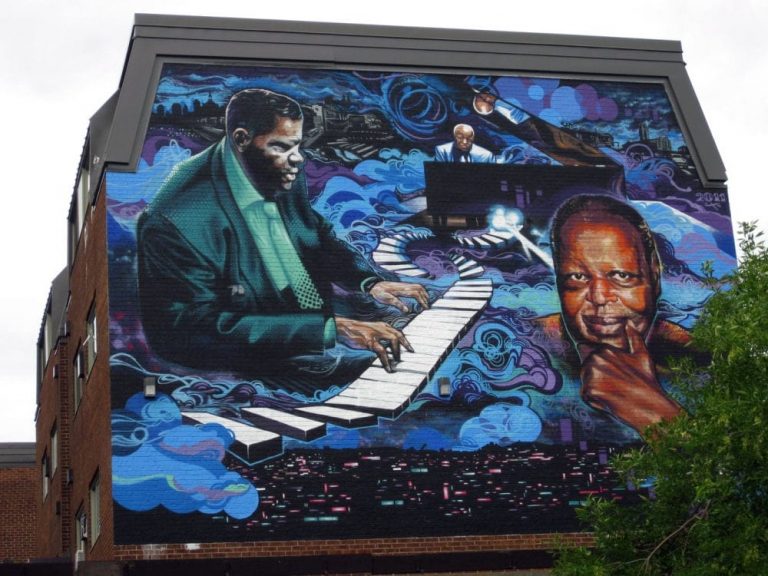
    This 950 square feet mural by Gene Pendon pays tribute to the great genius internationally renowned Montrealer pianist Oscar Peterson, in honor of the 5th anniversary of his passing. It was the opportunity to embellish the neighborhood where he was born but also give pride to its community by celebrating its musical heritage.
  • Engloutie

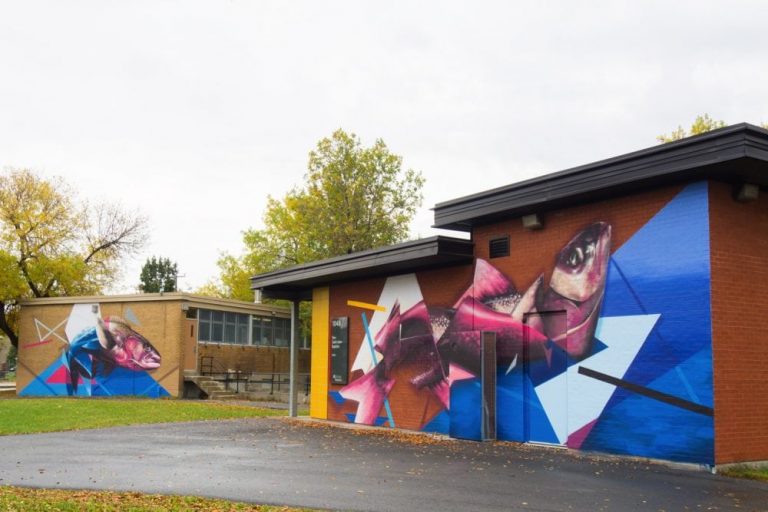
    In 2014, MU and the St-Laurent borough collaborated for the first time with the creation of a mural on Beaudet Street, bordering the park of the same name. In an effort to pursue the integration of mural arts and the revitalization of the neighborhood, as well as to contribute to the vision of Quartiers culturels et des Promenades urbaines, a second mural has been initiated in the area.

  • Intérieurs

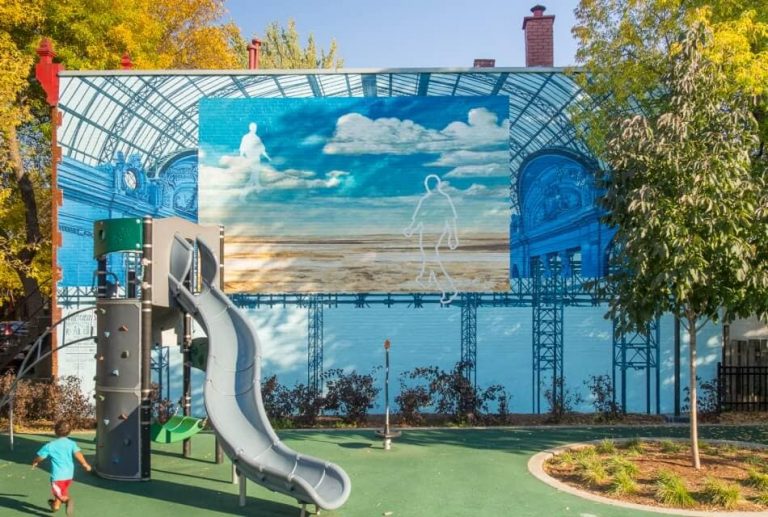
    This new mural is the finishing touch for the revitalization of Chateaubriand Bélanger Park. This work addresses the issue of public space. It will replace Nicolas Lehoux’s mural painted in 2001.

  • Migration

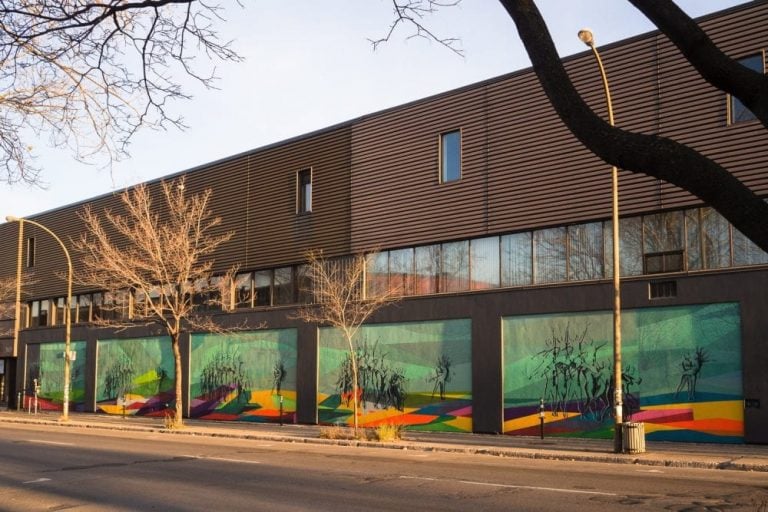
    In addition to highlighting the prominence of green and blue spaces in the area, this triptych of murals created by Bryan Beyung and produced by MU is an allusion to Saint-Jean-Baptiste street’s previous name.

  • Le meilleur des mondes nouveaux

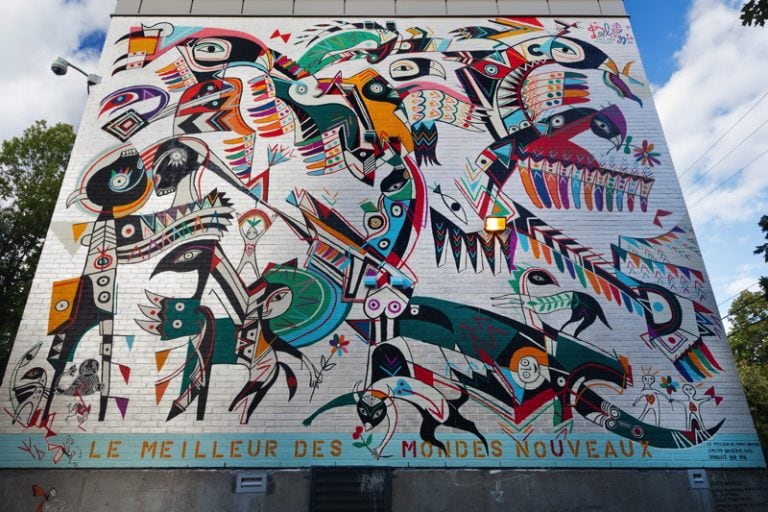
    Carlito Dalceggio’s openness and inclusive approach made him an obvious choice of artist for this mural. Through the vivid and whimsical use of universal iconography he explores themes that are dear to him, such as peace and harmony among people. Inspired by the 50th anniversary of Martin Luther King’s I have a dream speech given on August 28, 1963, the artist used this mural to express his own aspirations for a better world.

  • Hommage à Michel Tremblay

    This mural is part of a series entitled Hommage aux bâtisseurs culturels montréalais initiated in 2010 to highlight the contribution of the creative minds and forces behind Montreal’s reputation as an exceptional North American city. Since the launch of this ambitious project, a series of murals have been created to pay homage to the creative talents who have made outstanding contributions to the local, national and international reach of the city’s cultural scene.

  • Les conteurs

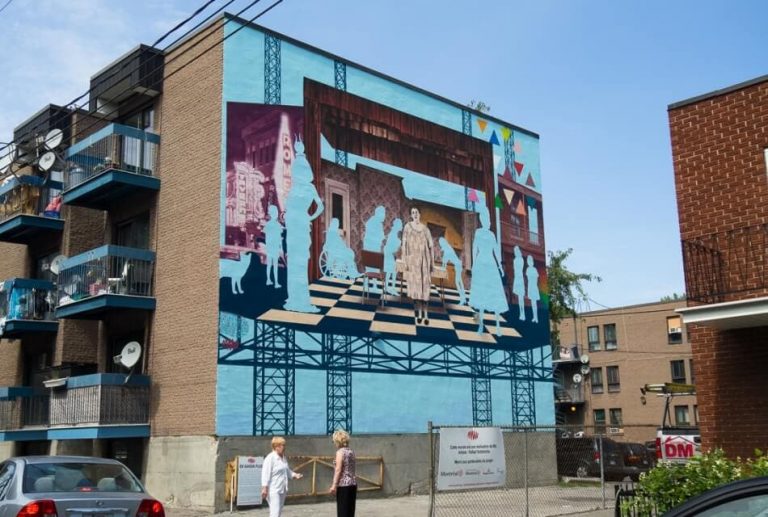
    This 2000-square foot mural was created by Richard Morin as part of the 50th anniversary celebrations of the National Theatre School of Canada (NTS). It pays homage to the disciplines taught at the NTS and is a testament to the vital artistic and cultural contribution of the NTS in the community.

  • Machine consciente

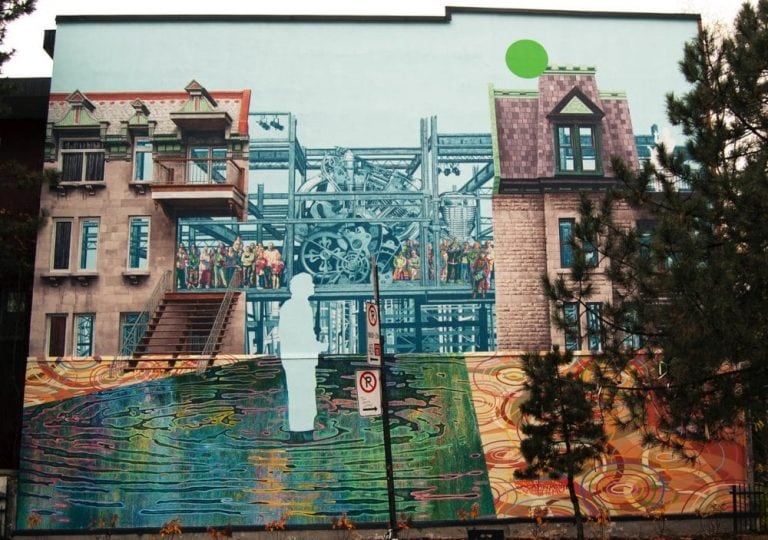
    At first glance, this mural resembles a stage set, depicting a giant motor, surrounded by actors and extras. When we take a closer look, we become aware of the richness and solidity of our human and technical potential. It reminds us that we only have to look within ourselves to find solutions to the threat of environmental issues.

  • L’euphorie des sages

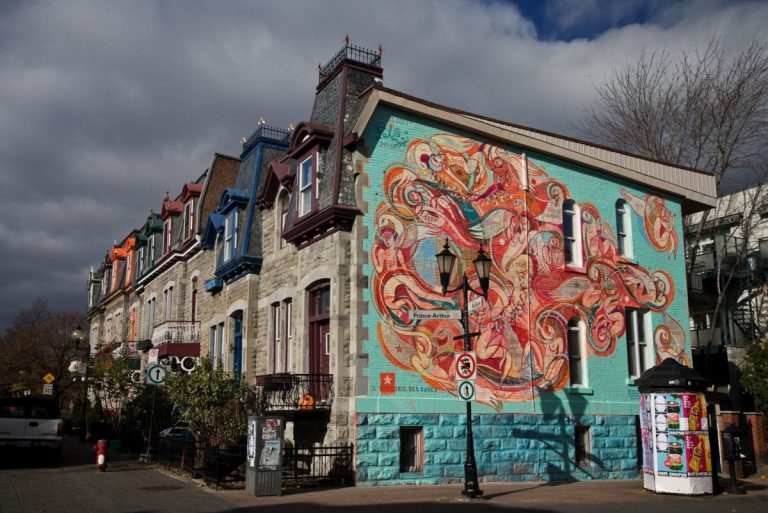
    This 1200 square feet mural painted by Carlito Dalceggio pays homage to its street residents, referred to by the artist as “the wise ones”. Just like the Mayan calendar predicts the end of a cycle in 2012, the artist views this date as the end of an era and the commencement of a new form of energy. The mural represents the joy and ecstasy that will overcome the neighborhood wise ones, particularly those that congregate around Prince-Arthur Street and St-Louis Square. 

  • Nous sommes ici

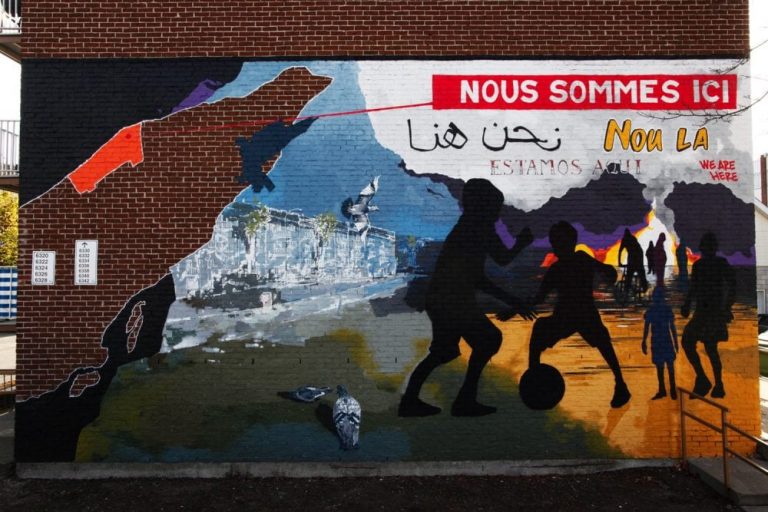
    The triptych of murals Nous Sommes Ici was created at the Place Normandie Housing Complex in Montreal-North. The silhouettes and the characters represent all generations, particularly the young, as well as friendship, mutual aid, sports and the arts. The trees evoke the community and its roots, strength and perseverance, dreams and hopes. The map clearly identifies Montreal-North as a place of pride and multiculturalism.

  • Diversitree

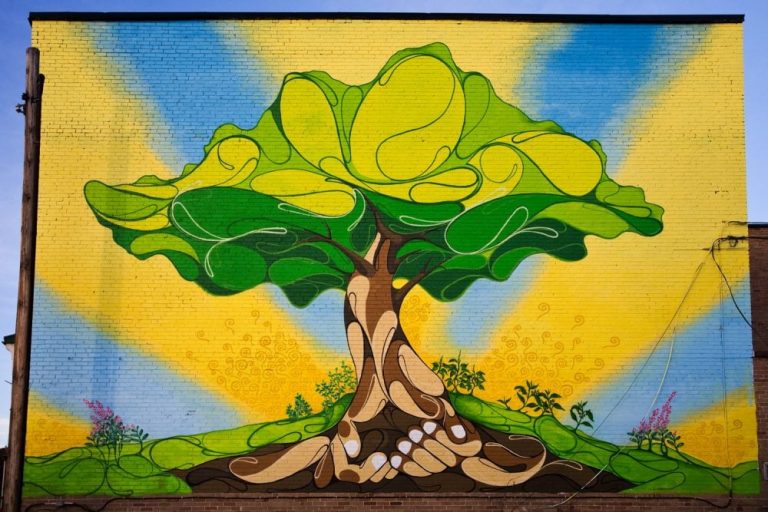
    The artist Peru Dyer was asked to create a 1400 square feet mural that symbolically celebrates cultural diversity, a theme, which greatly represents the Notre-Dame-de-Grâce neighborhood known for bringing together its many ethnic communities.

  • Jeu de mots

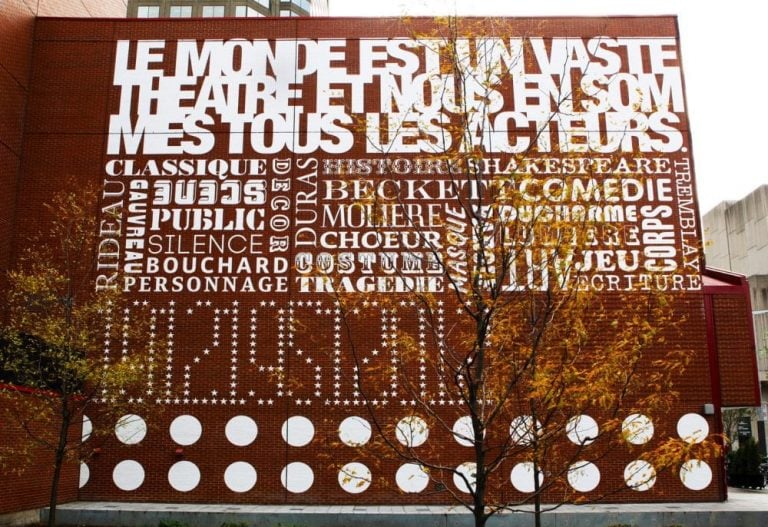
    This mural celebrates the hundredth anniversary of the mythic building that houses the Théâtre du Nouveau Monde (once the Gayety), a building that has always held the theatre as its vocation.

  • Le marais

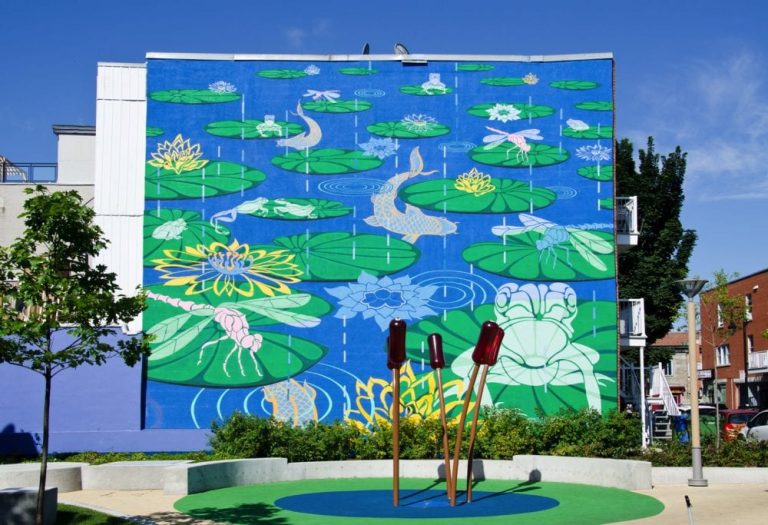
    Covering 1,100 sq. ft., this bright and colorful mural depicts endangered, native species as part of a marsh – a greater ecosystem – threatened by urban development.

  • Racines et horizons

    VSMPE is Montreal’s most ethnically diverse borough, encompassing about 75 different communities, including francophone, Italian, Greek, East Indian, Portuguese, Vietnamese, Maghrebi, and Haitian populations. Consequently, MU wanted to create a mural in VSMPE about cultural exchange.

  • La traversée

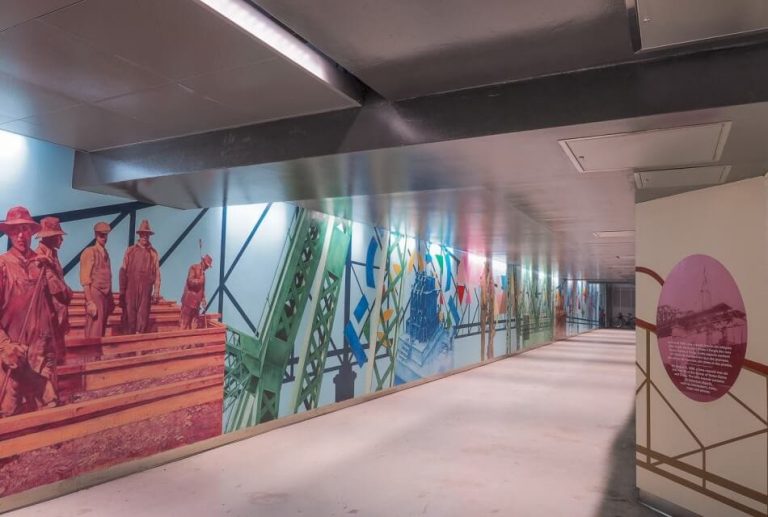
    “La Traversée” (The Crossing), a mural produced by MU in partnership with The Jacques Cartier and Champlain Bridges Incorporated, was carried out by Rafael Sottolichio in the pedestrian crossing of the Île Sainte-Hélène pavilion under the Jacques-Cartier Bridge deck.

  • Generations

    Painted during Présence Autochtone, Montreal First Peoples Festival, the mural by Gene Pendon — Montreal artist involved with First Peoples communities in Nunavut — pays tribute to the Innu women of Northern Quebec fighting for respect and protection of their rich natural, historical, human and cultural heritage.

  • Mémoire du coeur

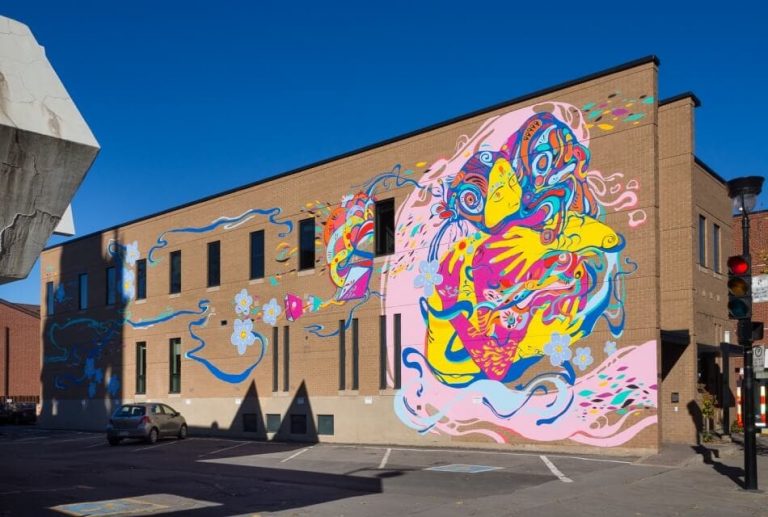
    This mural depicts two people hugging, evoking the fact that Alzheimer’s disease deprives people of their memories, but not of emotions or feelings. The mural also contains several forget-me-nots, a flower which is symbolically associated with the Society.

  • Cessez-le-feu

    The completion of the Mural “Cessez-le-feu” (Ceasefire) beautifully marks the conclusion of an important series which artist Phillip Adams began in 2012 at the Habitations Jeanne-Mance that is based on the four elements.

  • //\//\

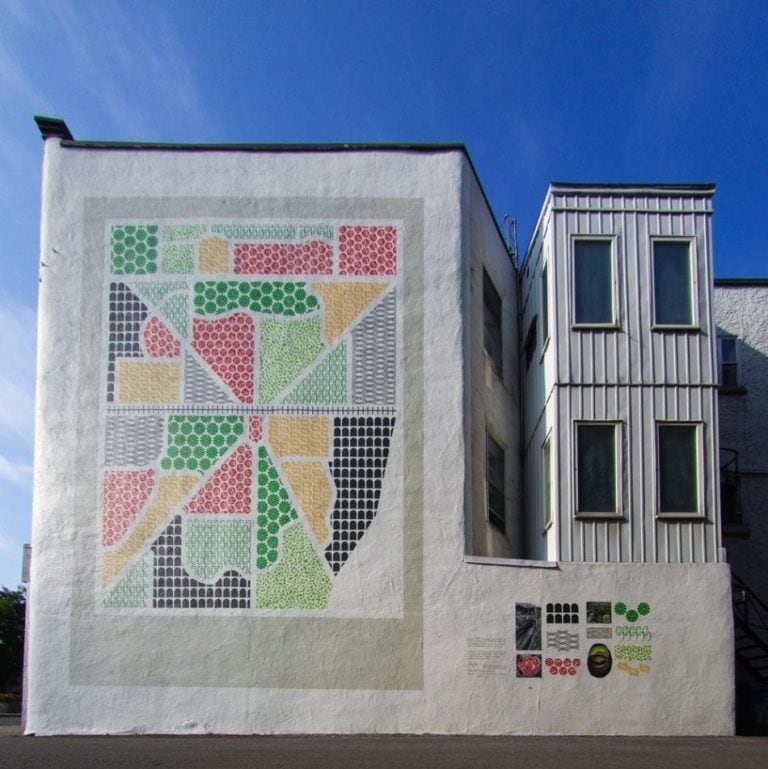
    Titled //\//\, the mural showcases the Town’s colours and history. Mount Royal’s urban plan was used as a canvas on which to depict the Town’s unique character, railway-related founding and rural past.