Fishing Boat Mural
Sarefina’s mural of a fishing boat stands at the corner of Carleton Street and Raquette Road.
The mural is painted on the wall of the Larche Industrial Marine Paint Centre.

Heritage (or historic) painting is a genre in painting defined by its subject matter rather than artistic style. Heritage paintings usually depict a moment in a narrative story, rather than a specific and static subject, as in a portrait.
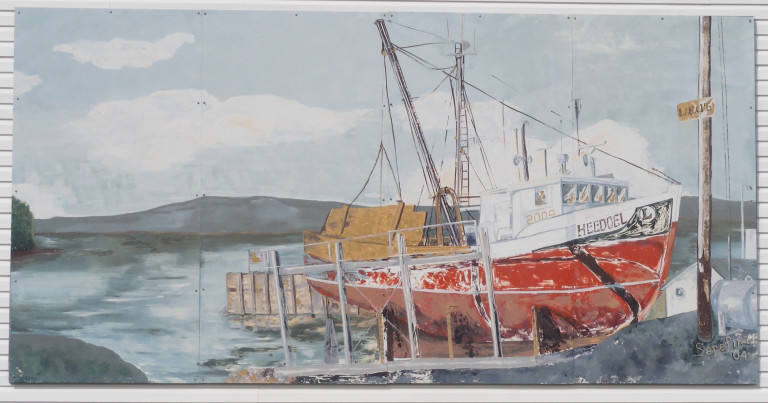
Sarefina’s mural of a fishing boat stands at the corner of Carleton Street and Raquette Road.
The mural is painted on the wall of the Larche Industrial Marine Paint Centre.
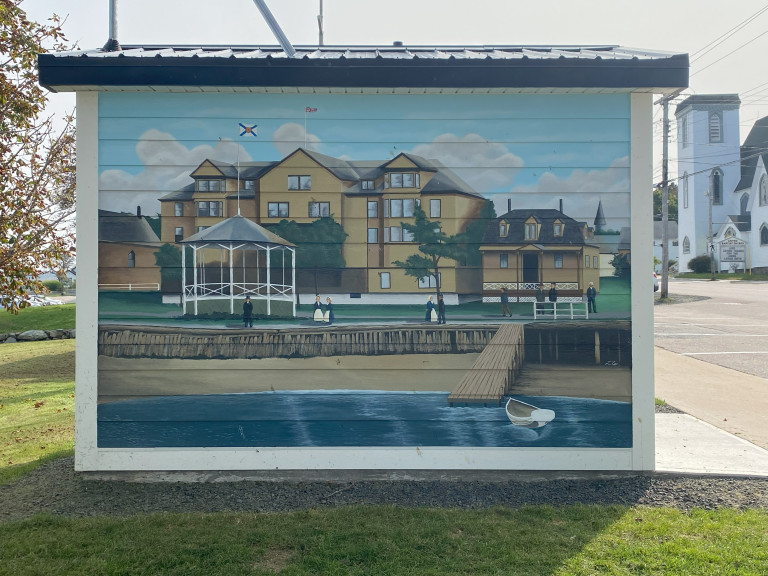
This mural by local artist Larry Lee is painted on the side of a small building, overlooking the Digby harbour. This scene depicts a serene shoreline with a beach and an opulent structure.
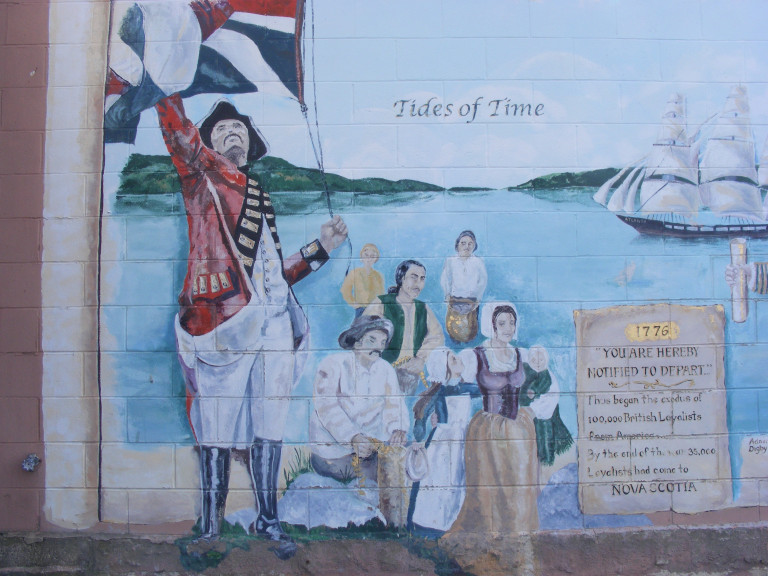
Completed in 2006, this mural illustrates scenes from Digby’s history: the Acadian Expulsion (Le Grand Dérangement) in 1755, M’ikmaw settlements and the influx of Loyalists to Nova Scotia following the American Revolution. The mural also highlights contemporary Nova Scotian culture in the images of the woman playing the fiddle, bagpipes, various kinds of ships, lobster and shellfish.
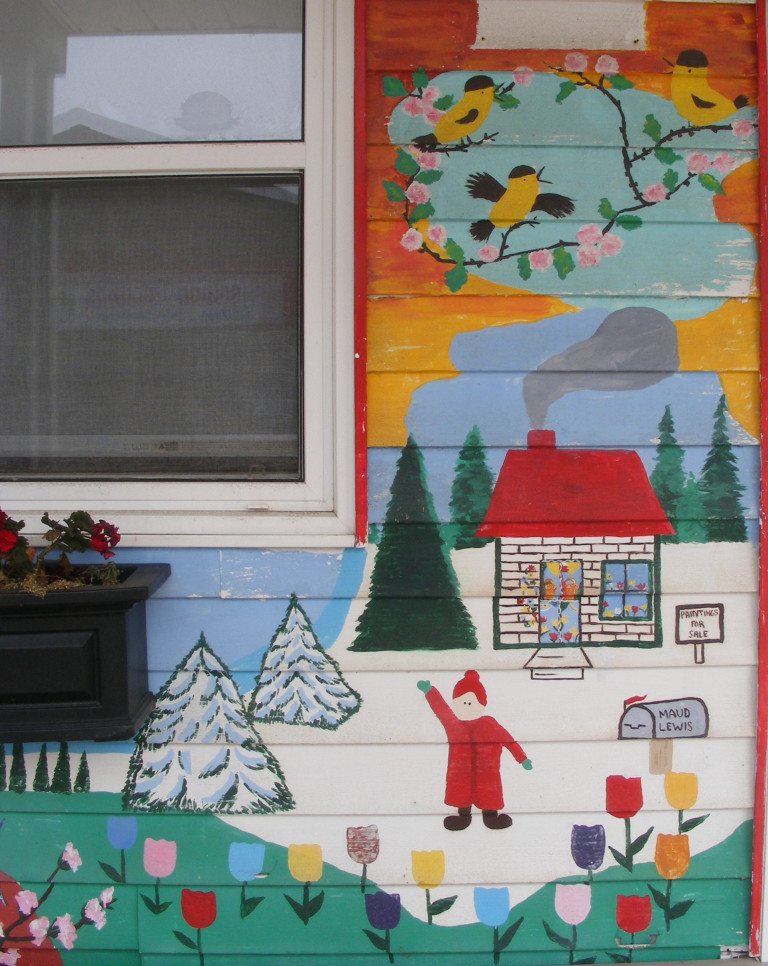
Mindy Gilbert’s tribute to folk artist Maud Lewis is painted on the Digby Visitor Information Centre. This mural features many of the motifs present in Lewis’s work: decorated oxen, deer in lush green fields, cats, butterflies, tulips, fishermen, Model T cars and Maud’s iconic house.
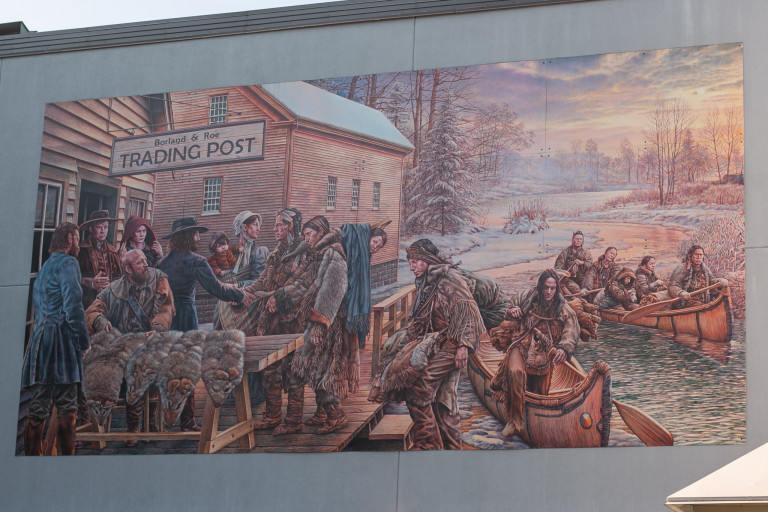
Large scale mural by John Kuna, acrylic latex on aluminum composite panel, measured 16 x 32 ft.
Commissioned by the Corporation of the Town of Newmarket in partnership with Buckley’s Insurance Brokers, Newmarket, ON, Canada. Completed in 2018.
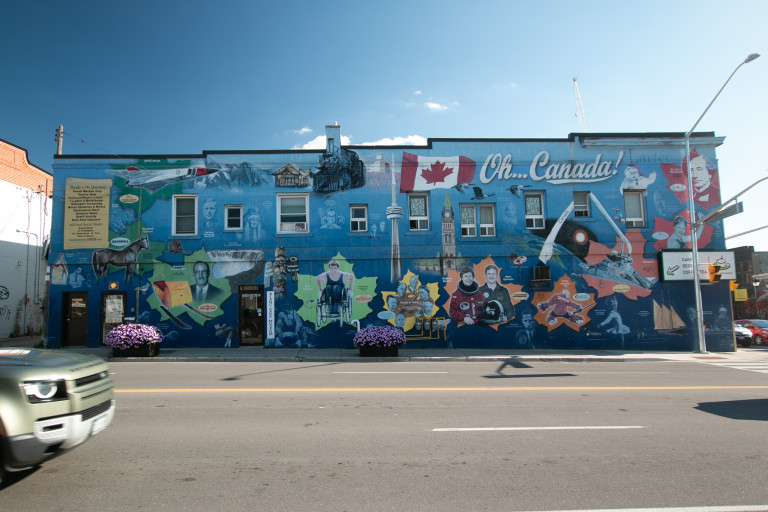
Large scale mural in Aurora featuring notable moments in Canadian history. Painted by William Lazos, Larry Mar, Attila Szanyi & Andres Correa in 2001.

Bell Box mural by Atessa Hooshvar & Sharon Rigby for the “Truth & Reconciliation” initiative located on 11 Mosley St. “A woven tapestry of indigenous and non-indigenous art.”
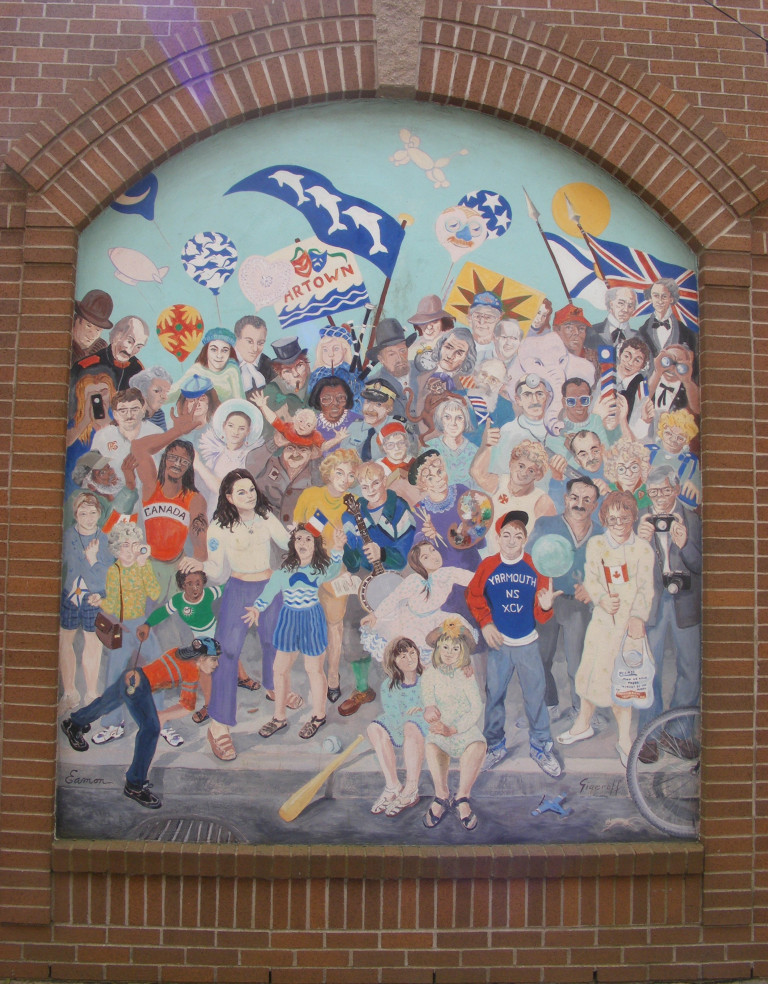
This triptych was commissioned by the late Jim MacLeod, a beloved pharmacist and town councilor. Two founders of Visual Arts Nova Scotia, the late Alex Gigeroff and the late Hugh Eamon, created this mural to commemorate Yarmouth’s community members and spirit of connection. The mural is located on the wall of the Pharamasave, overlooking Jim MacLeod Square and the Art Gallery of Nova Scotia.
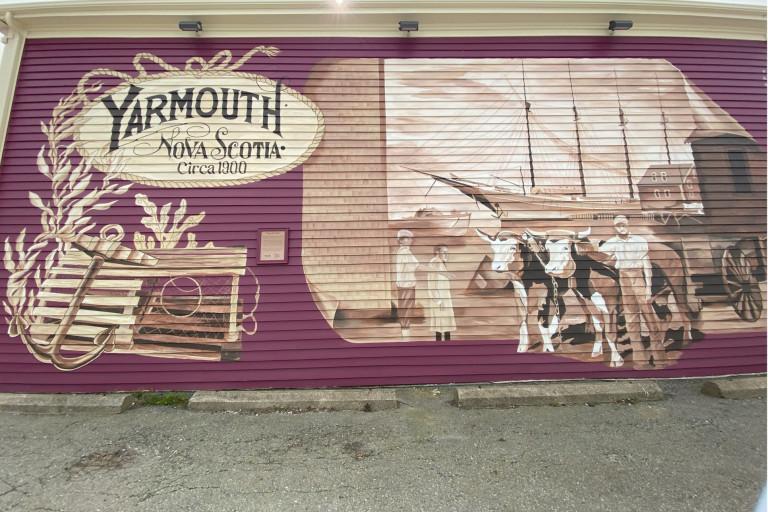
Funded by the Town of Yarmouth’s Mural Grant Program and property owner Richard LeBlanc, Danielle Mahood painted this mural inspired by a postcard of Yarmouth’s waterfront from 1900.
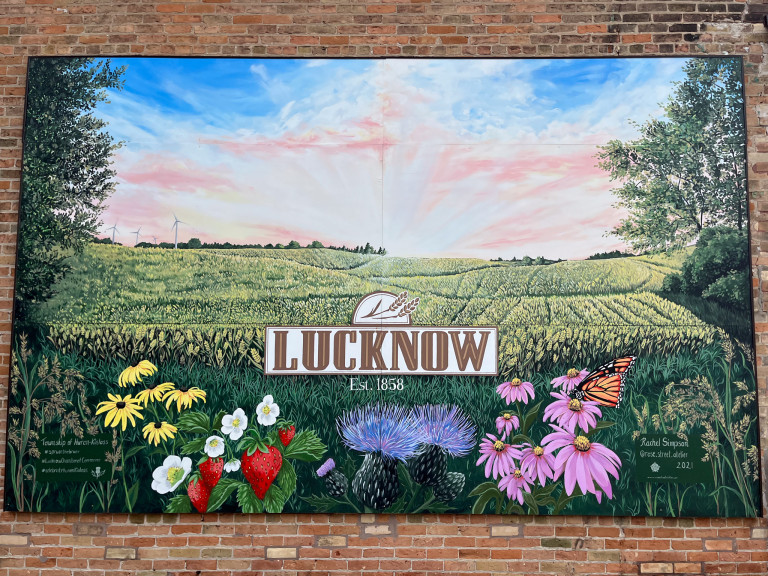
Heritage mural on panel for the town of Lucknow by Rachel Simpson, completed 2021. Township of Huron-Kinloss.
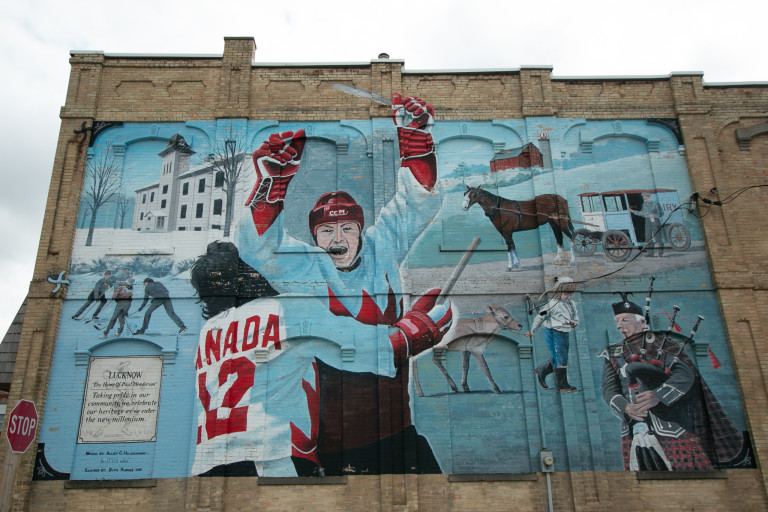
Heritage mural dedicated to hockey player Paul Henderson by late artist Allen C Hilgendorf, restored by Ruth Hurdle in 2020.
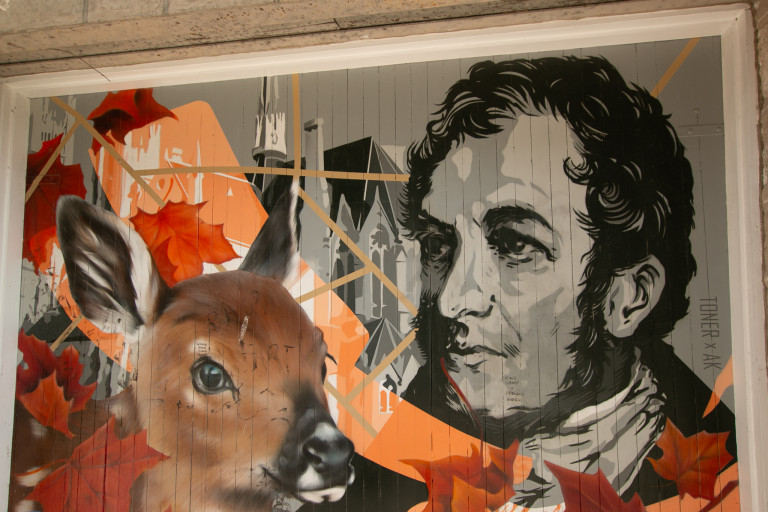
Collaborative mural by TONER & Alex Kwong for the City of Guelph Main Street Revitalization Initiative, 2019.
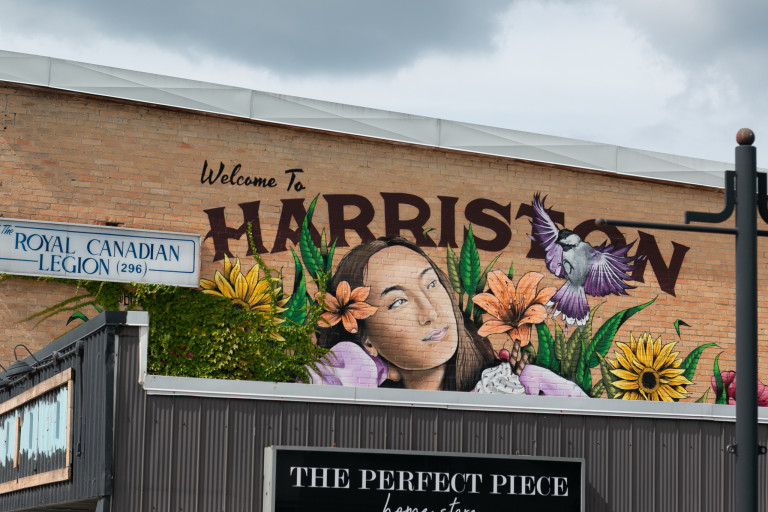
35’x15’ mural in aerosol & exterior latex by Blazeworks, 2020. “This mural explores the feeling of summer time that can be emphasized while enjoying ice cream. It depicts my sister daydreaming about plants in bloom, birds chirping and warm weather before eating her frozen treat.”
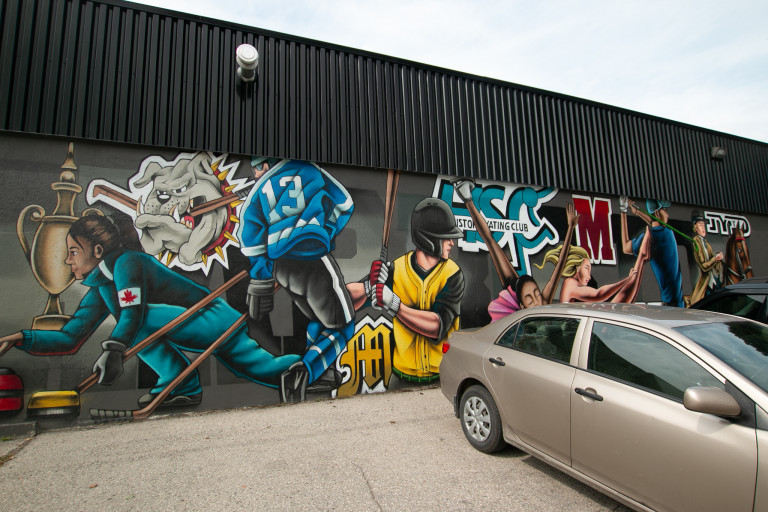
10’ x 50’ aerosol mural by Blazeworks for downtown Harriston. Mural encompasses a variety of different sports and teams throughout the Minto area.
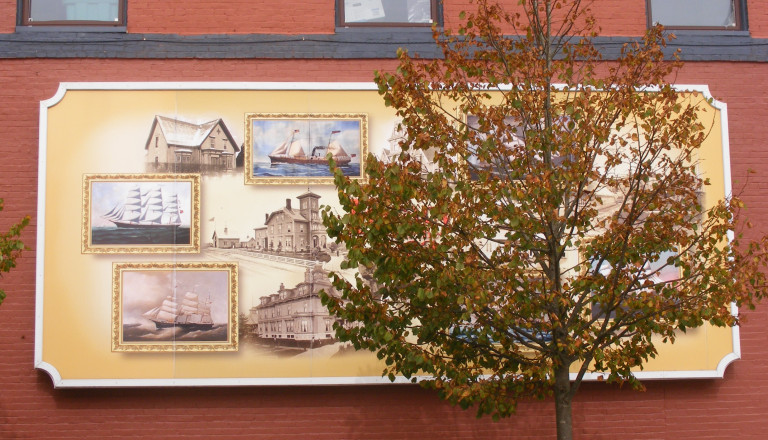
Located at the corner of Main Street and John Street, “Legacy of the Sea” depicts various scenes centered around Yarmouth’s historical connection to the Atlantic Ocean. The mural features artistic renderings of boats, photographs of heritage sites and a fisherman at the wheel of a boat.
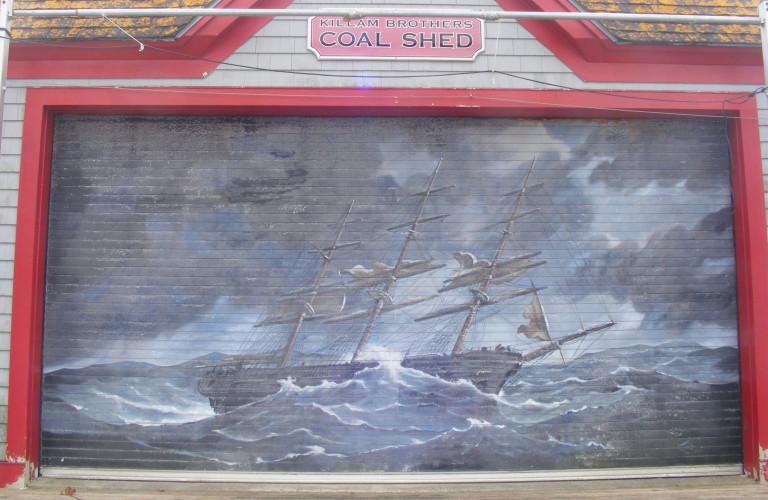
Painted prior to 2022, this mural by Nova Scotian artist Brian Porter is located on the Killam Brothers Coal Shed at the Yarmouth Wharf. This mural depicts a ship besieged by waves and a storm overhead, paying homage to Yarmouth’s nautical history and present day connection to seafaring and shipping.
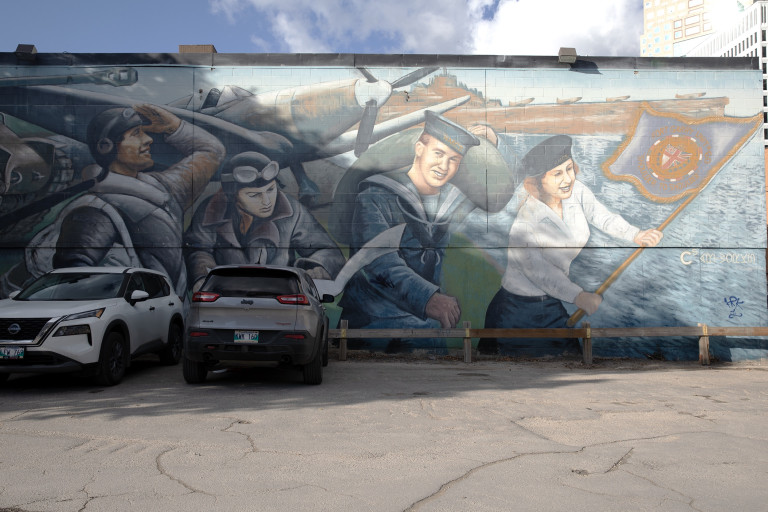
This mural commemorates those who have served and died in the in Army, Navy and Air Force. To the very left, a poem titled “For the Fallen” is being held. Next to this is Edith Anderson, who was an Indigenous woman who served as a nurse in World War I. She holds a fallen soldier. Sargent Tommy Prince is seen to the left-centre, an Indigenous war veteran who served in both World War II and the Korean War. To the right, Air Force pilot Russ Bannock and a female ATA pilot, seen studying the operating manual. On the right side of the mural, stands Hampton “Hammy” Grey, a naval pilot and a Canadian Wren, who bears the flag of the ANAF Unit 60.
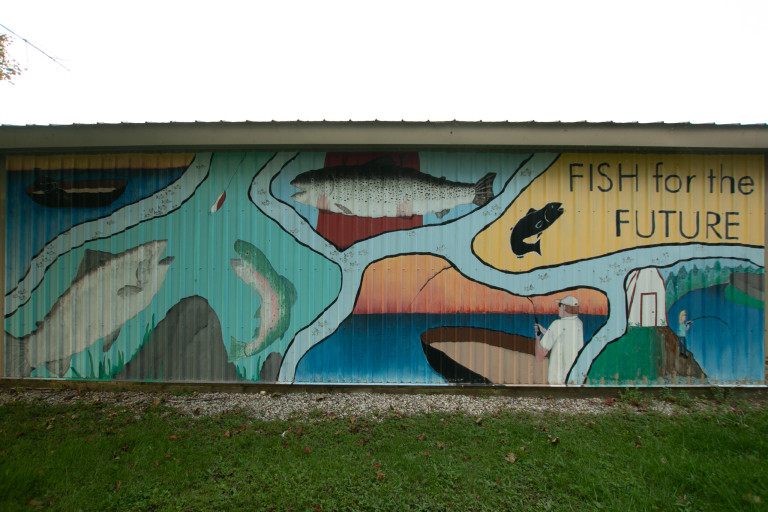
Mural on corrugation for Lake Huron Fishing Club by Scott Taylor, 2001.
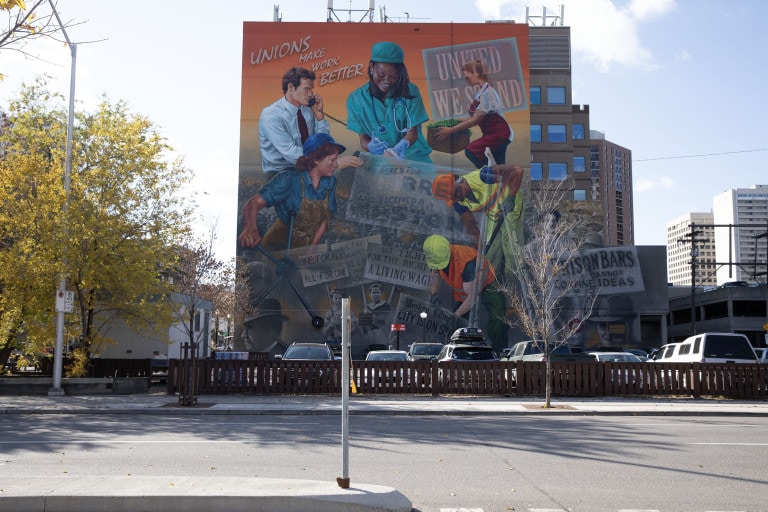
Winner of Winnipeg’s mural of the year 2020, this mural displays the history of the labour movement in Manitoba. It measures a total of 9,200 square feet, displaying images of various moments throughout our labour history. Including imagery from before the 1919 Winnipeg General Strike to during, then to the impact that it has had on contemporary working class citizens.
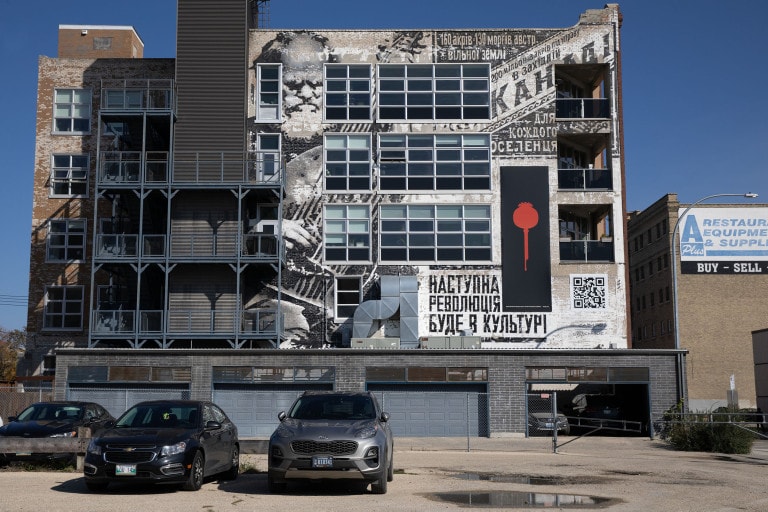
The title of this mural translates to “The next revolution will be in culture,” and the small print reads “Music from the deepest layers of the Ukrainian Tradition.” This work shares stories and music of Ukrainian culture, and promises immigrants a rich and fertile future. The red poppy represents the blood of those who are hungry with self-determination and reflects ideas of revolution and creativity. This poppy also comes from a 1996 music project by Ukrainian Artist Alexis Kochan, titled Paris to Kyiv.
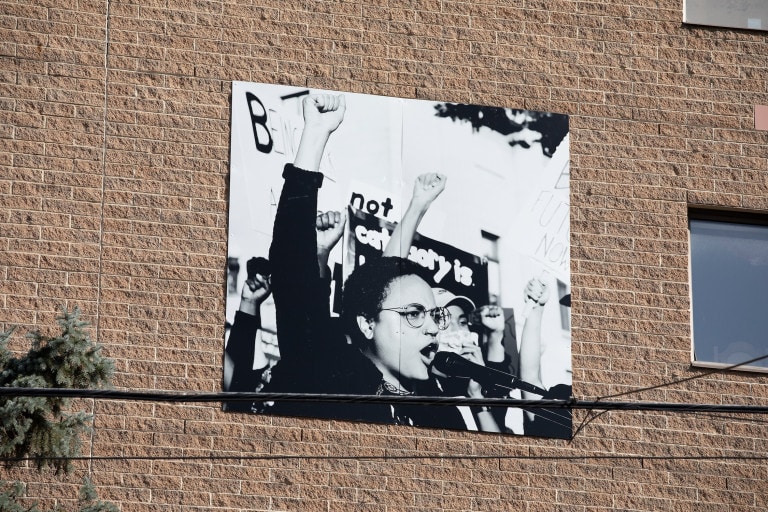
I took this photo at the Black Lives Matter rally at the Legislative building in June 2020. Justice for Black Lives Winnipeg were looking for black photographers to photograph the event in attempt to give black creatives the opportunity to tell their own stories. It was an experience unlike any other because as an artist I have never been in a space that was not only so welcoming but created for black artists. The event was also organized by young black femme community organizers so that was very special too, I saw myself reflected in them and that made the task of taking photos very personal. This photo is of one of the speakers at the event, Kayla Fernandes, who was reciting a poem that they had written. Personally, it was the most emotional part of the rally and Kayla’s emotions really came through in the photo, you can see the passion and the pain in their eyes. This photo is a product of the entire day and event as a whole, it is one of the best pictures I have taken because the environment I was put in allowed me and encouraged me to create from my own perspective. And as a black woman in the photography field being given the chance to create in this space might be a once in a lifetime opportunity. This is the photo I have been waiting to take ever since I first picked up a camera all those years ago.

The translation of Ninikan (Ni-nican ) meaning ‘I am here’ in Nahuatl is a mantra I’ve come to know and use in my Indigenous reclamation process and also how I acknowledge the presence of my ancestors here and now. The word Ninikan resonates for me because despite it taking me some time to get here, they have always been waiting here for me to hold space for them, as they have always held space for me. In acknowledging their presence, it has given me the authority to claim my Mesoamerican lineage and add meaning to the visual language of this piece through the incorporation of Indigenous body movements and the celebration of my pre-columbian ancestors. This scene depicts a tender moment between myself and my ancestor at night, when the veil and connection is the strongest and the sacuanjoche flowers are in full bloom and most fragrant.
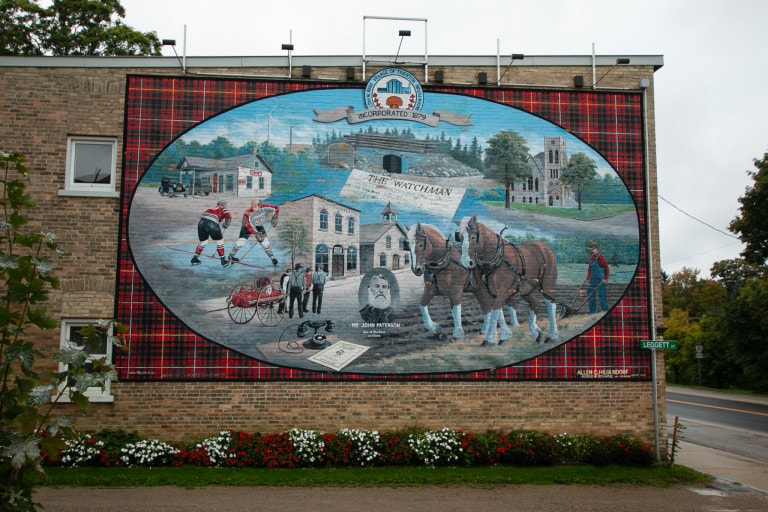
“Tiverton Mural” by Allen C. Hildendorf measuring 20’ x 35’ in acrylic. Painted in 2001.
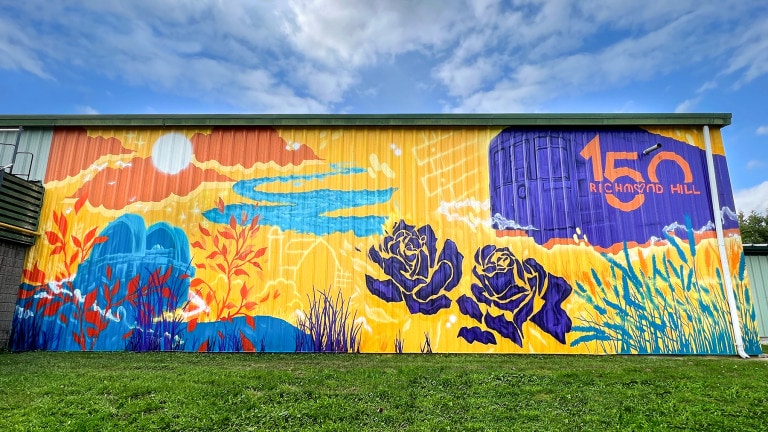
The mural was painted over a two-week period in July 2023 and represents the rich history of Richmond Hill. A nod to our past, present and future, the design features the radial train, iconic landmarks like the Richmond Hill David Dunlap Observatory, and elements of the City’s natural environment. It also includes roses commemorating Richmond Hill once being dubbed the “Rose Capital of Canada”, and wheat sheaths symbolizing the City’s humble beginnings as a farming town.
Sign up for our newsletter to get the latest news and events delivered straight to your inbox.
I have read and agreed to the Privacy Policy and the Terms of Service.
I understand that I can unsubscribe at any time by clicking the unsubscribe link in the Mural Routes newsletter.